How to Choose the Best Surgical Devices for Your Needs?
Choosing the right surgical devices is crucial for both medical professionals and patients. Dr. Emily Carter, a renowned expert in surgical technology, once stated, "The right tools can make or break a surgical outcome." This emphasizes the importance of selecting devices that meet specific needs.
When considering surgical devices, it’s essential to evaluate quality and effectiveness. Look for devices designed with the latest technology. Ask questions about usability and safety. Remember, the best device should enhance the surgical experience, not complicate it. Many options exist, but not all are suitable for your requirements.
However, it’s not just about picking the newest device. Some older devices perform better in specific applications. Reflect on past experiences with surgical devices. Personal stories and feedback from colleagues can provide valuable insights. Your choice can significantly impact surgical success, affecting patient recovery and satisfaction.

Understanding Your Specific Surgical Requirements
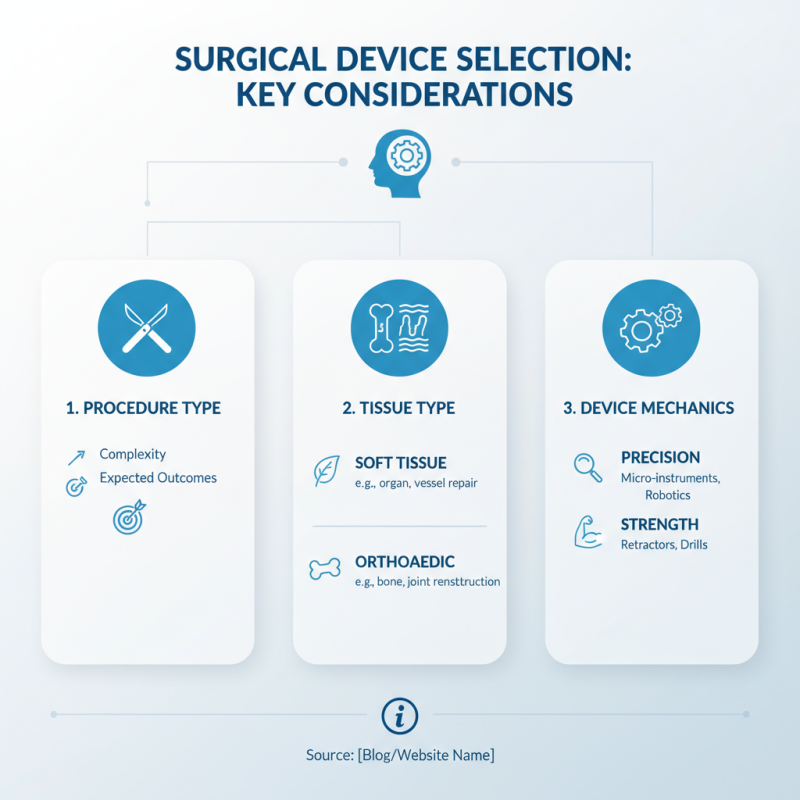
When selecting surgical devices, understanding your specific surgical requirements is crucial. Each surgical procedure has unique needs based on its complexity and expected outcomes. For instance, consider the type of tissue you will be working with. Soft tissue surgeries often require different instruments than orthopaedic procedures. Identify whether you need precision or strength in your devices.
Another important factor is ergonomics. The comfort of the surgical team can impact performance. Instruments that don’t fit well can lead to fatigue and mistakes. It’s vital to evaluate the design and usability of each device. Even small details, such as grip or weight, can significantly affect surgical outcomes.
Evaluating the technical specifications is also essential. Understanding the materials and technologies used can guide your choices. Different devices may have varied sterilization requirements and shelf lives. If unsure, seeking expert advice may be necessary. This reflective approach can uncover potential oversights. Your choices may seem ideal at first, but careful consideration often reveals room for improvement and necessary adjustments.
Evaluating Different Types of Surgical Devices Available
Choosing the right surgical device is crucial for effective procedures. Various types are available, each serving specific needs. For example, scalpel blades are essential for incision, while forceps help grip tissues securely. Understanding their functions can help in making informed decisions.
When evaluating these devices, consider their design and usability. Some tools may look advanced but can be challenging to handle. A device that is comfortable for the surgeon can enhance precision during surgery. It’s important to ask questions. Does the surgical team prefer specific tools? Why?
Moreover, examining the feedback from other surgeons can be enlightening. A high-tech device may not always yield better results. Sometimes, trusted traditional instruments perform excellently. Balancing innovation with reliability is essential for successful outcomes.
Comparison of Surgical Device Types by Popularity
Assessing Quality and Safety Standards in Surgical Equipment
When evaluating surgical equipment, quality and safety standards should be the primary focus. A recent report from the World Health Organization indicated that 23% of surgeries face complications due to substandard equipment. This statistic highlights the critical need for reliable surgical devices. High-quality surgical instruments not only enhance patient outcomes but also reduce the risk of infections and other complications.
The International Organization for Standardization (ISO) provides guidelines for assessing the quality of surgical devices. Compliance with ISO 13485, which sets the requirements for a quality management system in medical devices, is essential. Devices that lack this certification often exhibit flaws that could jeopardize patient safety. For instance, improper sterilization practices can lead to post-operative infections. These infections affect up to 2% of patients undergoing surgery, leading to prolonged hospital stays and increased healthcare costs.
While many devices meet basic safety standards, not all are created equal. Manufacturers may cut corners, leading to variability in the quality of surgical instruments. Surgical staff should evaluate each device's history and inspect certifications thoroughly. Inadequate attention to detail at this stage may result in critical errors during surgery. It’s imperative to ensure that the chosen devices not only follow safety protocols but also have a track record of effectiveness. This can be a daunting task, but neglecting quality control is a risk that cannot be justified.
Comparing Costs and Budget Considerations for Surgical Devices
When selecting surgical devices, understanding costs is crucial. Budget constraints often dictate choices. Higher prices do not always equate to better quality. A thorough evaluation is key. Consider not just the initial purchase price, but also long-term cost implications. Maintenance, repairs, and replacements may add to the overall expense.
Many facilities face budget limitations. This might lead to the temptation of opting for lower-cost devices. However, this can compromise safety and efficacy. Not every budget-friendly option will meet surgical needs. Some cheaper devices may lack features that ensure proper functionality. Quality should never be compromised for cost savings.
Reflect on the total cost of ownership. Include training expenses for your team. Evaluate how the device impacts workflow efficiency. Sometimes, investing in a pricier option may offer greater returns. It can enhance productivity and patient outcomes. Always weigh these factors carefully for the best decision.
Seeking Expert Advice and Recommendations for Best Choices
Choosing surgical devices is not just a technical decision; it’s about patient safety and optimal outcomes. Expert recommendations can guide you through this intricate process. According to a recent report, surgical errors cost healthcare systems billions annually. This highlights the importance of making informed choices.
When selecting devices, consider their usability and reliability. A study showed that nearly 30% of surgeries were impacted by device failures. Engaging with specialists can provide insights into the latest innovations and technologies. Many experts recommend evaluating devices based on peer reviews and clinical studies. This can ensure that you’re making choices based on real-world performance.
It's essential to reflect on past experiences when selecting new devices. The surgical field constantly evolves, and prior data may not be applicable today. Understand that even leading devices can fail in specific situations. Assessing feedback from surgical teams is crucial. Their insights can address any gaps or shortcomings in your initial choices.