How to Choose the Right Surgery Instruments for Your Needs?
Selecting the right surgery instruments is crucial for effective medical procedures. According to a report by Market Research Future, the global surgery instruments market is projected to reach $12 billion by 2025. Surgeons and medical professionals need to make informed decisions about the tools they use. Dr. Emily Hart, a renowned expert in surgical techniques, emphasizes, "The right instruments can make or break a procedure."
Choosing the proper instruments requires understanding your specific needs. Different surgeries demand unique tools. For instance, orthopedic instruments differ vastly from general surgical instruments. If a surgeon opts for the wrong tools, it can lead to complications. Inadequate instruments can slow down procedures and jeopardize patient safety.
A thoughtful approach to selecting surgery instruments is essential. It's not just about cost-effectiveness; it's about investing in quality. Having the right instruments impacts surgical outcomes and patient satisfaction. As we navigate this complex landscape, careful consideration and expert guidance become increasingly important.

Understanding Different Types of Surgical Instruments Available
Choosing the right surgical instruments can be daunting. Understanding the various types available is crucial. Surgical instruments fall into several categories: cutting, grasping, clamping, and suturing. Each type serves a distinct purpose in surgical procedures.
Cutting instruments, like scalpels and scissors, enable precise incisions. Grasping tools, such as forceps, provide secure holds on tissues. Clamping devices, like hemostats, control bleeding by clamping blood vessels. Suturing instruments, including needle holders, help in stitching tissues together effectively.
Tips: Always prioritize quality over price. Investing in well-made instruments can enhance surgical outcomes. Consider the specific needs of your procedures. Not all surgeries require the same tools. Reflect on past experiences. Were there instruments you wished you had? This can guide future purchases.
Understanding Different Types of Surgical Instruments
Assessing Your Specific Surgical Requirements and Needs
Choosing surgical instruments requires a clear understanding of specific needs. Each procedure has unique requirements. For example, orthopedic surgeries demand specialized tools for bone manipulation. According to industry reports, nearly 34% of surgeons face challenges in instrument selection. This gap often leads to suboptimal outcomes.
Assessing surgical needs involves thorough evaluation. Are you performing minimally invasive surgery? Or perhaps open surgeries? Your choices should reflect these approaches. Reports indicate that 67% of surgical errors stem from improper tool usage. Based on this, it's critical to evaluate the precise instrument for each task. Details matter. Assess the material, design, and ergonomics to enhance surgical efficiency.
In addition, consider the learning curve associated with new instruments. Many surgeons express frustration over unfamiliar tools. About 42% reported needing additional training. Selecting instruments with intuitive designs may ease this issue. Regular feedback loops among surgical teams can help refine instrument choices, ensuring tools align with procedural goals.
Factors to Consider When Selecting Surgical Instruments
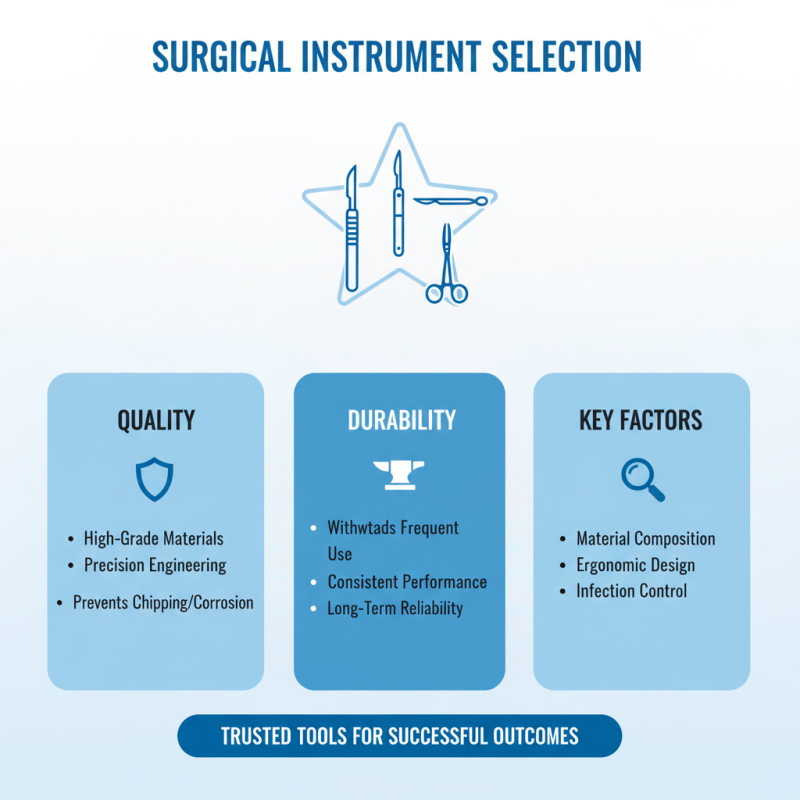
Choosing the right surgical instruments is crucial for successful outcomes. Consider the material quality. Stainless steel remains a popular choice due to its durability. Research shows that instruments made from high-grade materials can last up to 30% longer. This longevity can significantly impact operational efficiency in any surgical setting.
Also, think about the type of procedure you’ll perform. Various surgeries require specific instruments. For instance, precision instruments are vital in microsurgery. A report by the National Surgical Instruments Association states that improper instrument selection contributes to 25% of surgery delays. This statistic indicates a pressing need for careful evaluation.
Another important factor is ergonomics. Surgical instruments should feel comfortable in your hand. Discomfort can lead to fatigue, affecting performance. Studies indicate that 40% of surgeons experience hand strain from poorly designed tools. It’s essential to test instruments before purchasing. Consider consulting experienced colleagues. Their insights can provide valuable guidance, especially when facing new challenges.
How to Choose the Right Surgery Instruments for Your Needs?
| Instrument Type |
Material |
Purpose |
Considerations |
| Scalpel |
Stainless Steel |
Incision |
Sharpness, Size |
| Forceps |
Stainless Steel |
Grasping |
Tip Design, Length |
| Scissors |
Stainless Steel |
Cutting |
Blade Size, Curvature |
| Needle Holder |
Carbon Steel |
Suturing |
Gripping Mechanism, Length |
| Curette |
Stainless Steel |
Scraping |
Shape, Handle Design |
Budgeting for Surgical Instruments: Cost vs. Quality Analysis
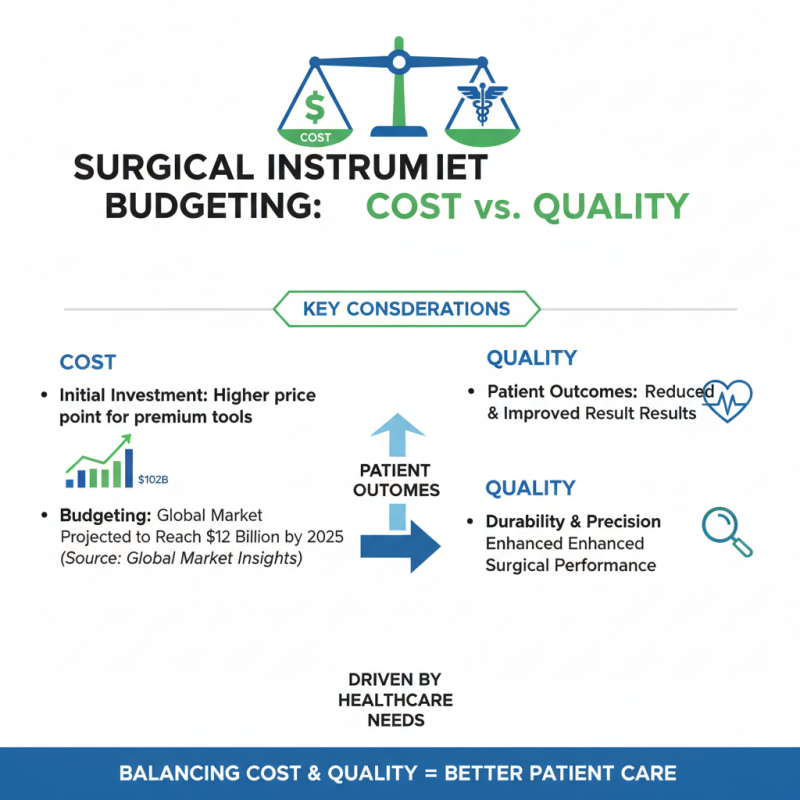
When budgeting for surgical instruments, balancing cost and quality is crucial. A recent report by the Global Market Insights suggests that the surgical instruments market is projected to reach $12 billion by 2025, driven by increasing healthcare needs. This highlights the growing demand for quality instruments in medical settings. Investing in high-quality tools can significantly reduce complications and improve patient outcomes, but they often come at a higher price point.
Many hospitals struggle with budget constraints. A survey by the Healthcare Financial Management Association indicated that 48% of healthcare facilities admitted to compromising on instrument quality due to budget limitations. While it’s tempting to opt for cheaper options, this can lead to higher long-term costs through increased repairs, replacements, or negative patient outcomes. Ultimately, the choice between cost and quality should reflect the specific needs of the practice and the patient population served.
Balancing personal experience and data-driven decision making is vital. Explore options that offer good value without sacrificing functionality. For instance, consider instruments with longer warranties or those backed by robust service agreements. This may mean paying more upfront, but the potential for better outcomes is worth the investment. Neglecting this analysis can lead to significant financial and operational drawbacks in the long run.